Did you know that many people confuse the terms “addenda” and “addendums” despite their distinct meanings? Understanding the difference between these two words is crucial for clear and precise communication, especially in academic and professional settings. This article will break down the nuances between addenda vs. addendums, empowering you to use each term correctly. By the end, you’ll be equipped with the knowledge to enhance your writing and avoid common pitfalls.
Is it Addenda or Addendum?
An addendum is a singular item of added material, typically appended to a document or contract to provide supplementary information. The dictionary recognizes both addenda and addendums as accepted plural forms for this word. Addenda is the original Latin plural form and remains the more traditional and frequently used choice in formal and technical writing.
When to Use Addendum
An addendum acts as a lifeline in the ever-evolving landscape of contracts and agreements. It’s crucial to utilize this tool when unforeseen circumstances arise that necessitate changes without rewriting the original document. Imagine a real estate transaction where a sudden revelation about property zoning emerges; an addendum allows all parties to address this issue while preserving the integrity of the initial agreement.
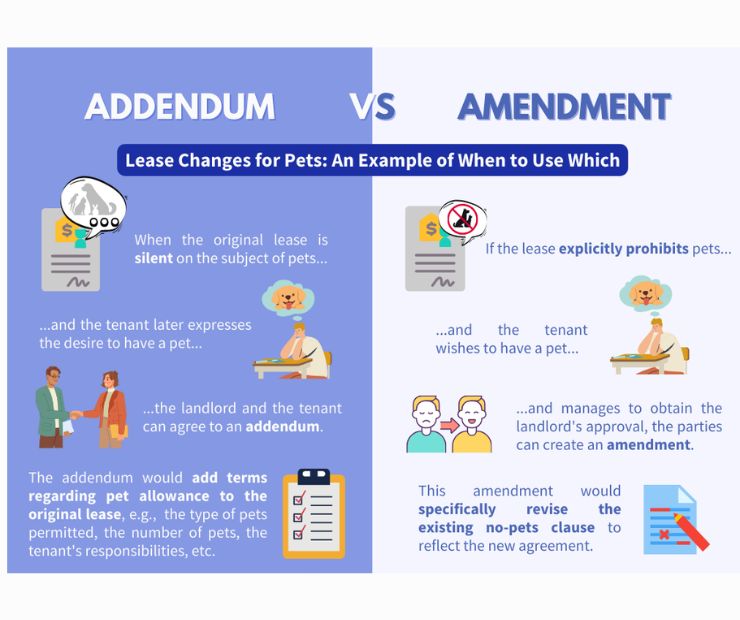
Utilizing an addendum signals a proactive approach to communication, fostering trust and transparency among stakeholders. It invites collaboration and ensures that everyone is on the same page, mitigating potential disputes.
When to Use Addenda
Addenda often serve as crucial clarifications in the contract realm, but their timing is what truly determines their effectiveness. Utilizing addenda during the bid process can help address ambiguities or updates that arise after the initial contract is agreed upon.
Integrating addenda post-award can still be beneficial, particularly when unforeseen circumstances disrupt the original terms. These documents allow for modifications without needing to draft an entirely new agreement. Utilizing addenda in this manner not only keeps projects on track but also demonstrates a commitment to adaptability.
Using Addenda in a Sentence
The textbook’s latest printing has been updated with an addendum covering recent Supreme Court rulings, which appears alongside five other addenda that address evolving legal theories.
[Law & Education Press]
Before signing, please review the attached insurance addendum and ensure all four addenda in the packet are initialed on the final page.
[Client Service Memorandum]
The initial proposal was rejected for lacking a required safety addendum; the resubmitted package now includes that document plus three additional addenda responding to the review committee’s technical questions.
[Federal Grant Administration]
Using Addendum in a Sentence
The building’s lease contained a separate rent addendum that detailed all annual increases for the full ten-year term.
[Real Estate Law Journal]
According to the merger agreement’s final addendum, all employee stock options would be converted immediately upon closing.
[Financial Times]
The project bid must include the standard proposal form, along with an addendum clarifying the timeline for each construction phase.
[RFP Guidelines]
Read more: Striped/striping vs stripped/stripping
How to Remember the Difference Between Addendum vs. Addenda
To effectively remember the difference between “addendum” and “addenda,” think of the “a” in “addendum” as a solitary figure — representing a single addition. It’s like a lone chapter in a book, supplementing the main content. In contrast, “addenda” has that plural “a,” which suggests a group.
Another helpful trick is to link these terms to common contexts. Consider legal documents or reports where clarity and detail are crucial; an “addendum” might clarify a specific term, while “addenda” could include multiple clarifications for various sections. Visualizing the singular and plural as different layers in a multi-faceted approach can be a handy mnemonic device.
Conclusion
Understanding the distinction between “addenda” and “addendums” is crucial for effective communication, particularly in professional and academic settings. While both terms refer to supplementary materials, “addenda” is the correct plural form of “addendum,” and using it can convey a better grasp of the language. Misusing these terms can lead to confusion and might undermine your credibility. By honing your language skills, you can enhance your writing and avoid common pitfalls. So, next time you find yourself needing to reference additional information, remember the difference and choose your words wisely!