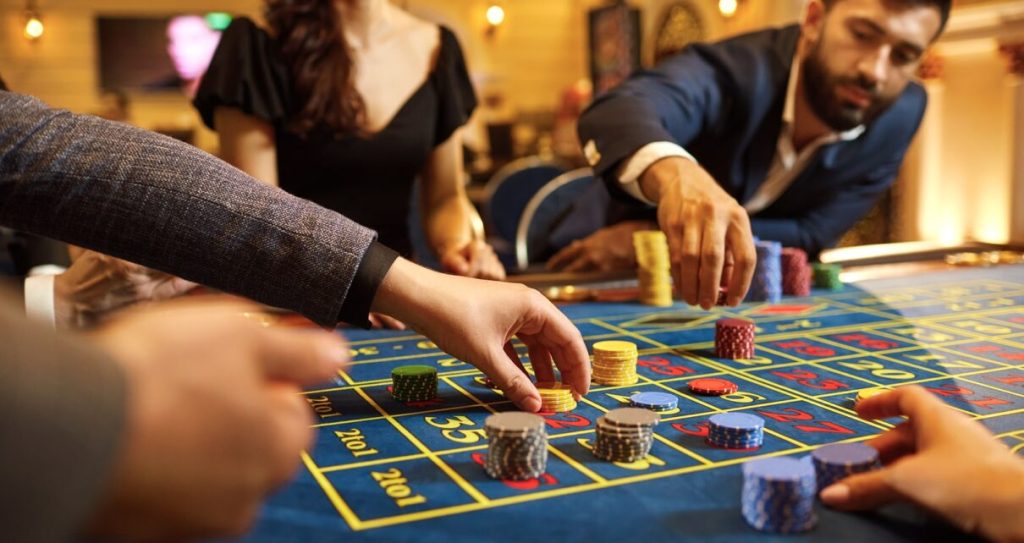
Most people walk into a casino without knowing the basic rules. This lack of preparation leads to quick losses and frustration. Learning the fundamentals before you start playing makes the experience more enjoyable and helps you keep more of your money.
How Blackjack Works and Why It Matters
Royal Reels and other casinos pack blackjack as one of the most popular card games. The goal is simple: get cards that total 21 or come closer to 21 than the dealer without going over. You play against the dealer, not other players.
In blackjack, each card has a value. Number cards are worth their face value. Face cards (king, queen, jack) are worth 10. An ace can be worth either 1 or 11, depending on which helps your hand more.
The game starts when you and the dealer each receive two cards. You see both your cards and one of the dealer’s cards.
You then decide to hit (take another card), stand (keep your current total), or use other options depending on the casino rules. The dealer follows strict rules and must hit until reaching 17 or higher. Understanding these mechanics is the first step to playing confidently.
Basic Strategy in Blackjack
Blackjack is one of the few casino games where the decisions you make directly affect your chances of winning. Basic strategy is a set of rules that tells you the best move for every possible hand combination. It is based on mathematics and reduces the house edge significantly.
The table below shows common situations and the recommended actions:
| Your Hand Total | Dealer Shows | Recommended Action |
| 16 or less | 2-6 | Stand |
| 16 or less | 7-Ace | Hit |
| 17 or more | Any card | Stand |
| 11 | Any card | Double down |
Following basic strategy does not guarantee wins, but it minimizes losses over time. Most experienced players use a printed chart until they memorize the decisions.
Roulette: A Game of Pure Chance
Roulette is fundamentally different from blackjack because your choices do not affect the outcome. The wheel spins, the ball lands on a number, and the game is decided. This is a game of chance, meaning luck determines everything.
In roulette, you place bets on where you think the ball will land. You can bet on a single number, a group of numbers, red or black, or even or odd. The more likely your bet, the smaller the payout. The less likely your bet, the larger the payout if you win.
American roulette has 38 numbered slots (0, 00, and 1-36). European roulette has 37 slots (0 and 1-36). This difference matters because the extra 00 in American roulette increases the house edge. Know this difference before you play.
Roulette Bet Types and Payouts
Different bets offer different odds and different rewards. Here are the main bet categories:
- Inside bets: You bet on specific numbers or small groups. A single number pays 35 to 1. Two adjacent numbers pay 17 to 1.
- Outside bets: Red or black pays 1 to 1. Odd or even pays 1 to 1. High (19-36) or low (1-18) pays 1 to 1.
- Column bets: You bet on one of three columns and win if the ball lands on any number in that column. This pays 2 to 1.
- Dozen bets: You bet on numbers 1-12, 13-24, or 25-36. This pays 2 to 1.
The house edge in roulette stays the same regardless of which bet you choose. The mathematical advantage always favors the casino.
Poker: Where Skill Matters
Poker combines chance with player skill. You compete against other players, not the house. Your decisions about which cards to keep, how much to bet, and when to fold directly determine your results.
In most poker games, you receive cards and can bet, fold, or check based on your hand strength. The player with the best combination of five cards wins the pot. Hand rankings from strongest to weakest are: royal flush, straight flush, four of a kind, full house, flush, straight, three of a kind, two pair, one pair, and high card.
Beginners often make mistakes by playing too many hands or betting too much on weak cards. Patience and selective play matter more than aggressive betting.
Starting Hand Selection
Successful poker players are disciplined about which starting hands they play. Playing only strong hands surges your results.
- Always play: pairs from 7 to ace, ace-king, ace-queen, king-queen, and ace-jack of the same suit.
- Sometimes play: smaller pairs, ace-ten, king-jack, and queen-jack depending on your table position.
- Usually fold: hands with weak cards or cards that are not connected or of the same suit.
Position matters in poker. Playing from a later position (closer to the dealer button) allows you to see other players’ actions first, which is an advantage.
Slot Machines: Understanding the House Edge
Slot machines are the simplest casino game. You put in money, spin the reels, and see if matching symbols pop. Each game is completely random and independent. The outcome is determined by a random number generator, and nothing you do affects the result.
The house edge in slots is typically between 2% and 15%, depending on the specific machine and casino. This means the casino keeps that percentage of all money played over time. You cannot improve your chances through strategy.
Modern slots roar with bonus rounds and higher maximum payouts, but the fundamental truth remains: slots are a game of luck only.
Managing Your Money and Playing Responsibly
How much money you bring to the casino is critical. Set a budget before you arrive and never exceed it. This is money you can afford to lose completely. Treat it like the cost of entertainment, not an investment.
Divide your budget into sessions. If you budget $200 for the evening, you might play four sessions of $50 each. When you finish a session, you stop, whether you won or lost. This prevents the common problem of staying too long and losing everything.
Here are the key money management practices:
| Practice | Purpose | How It Helps |
| Set a total budget | Limit total losses | Prevents spending more than you can afford |
| Divide into sessions | Control playing time | Stops you from losing all money at once |
| Stop when ahead | Protect winnings | Many winners continue playing and crash |
| Avoid chasing losses | Prevent deeper losses | Betting more to recover losses usually backfires |
Recognize that casino games have a mathematical house edge. You cannot beat this advantage through strategy or luck in the long run. The only realistic outcome is that you lose money over time. Play because you enjoy it, not because you expect to profit.
Games of Skill Versus Games of Chance
The difference between these categories affects how much control you have. Games of chance like roulette and slots depend entirely on random events. Games of skill like poker and blackjack reward knowledge and good decision-making.
This distinction matters for your expectations. In skill games, practice and study surge your results. In chance games, no amount of practice changes the odds. Both can be fun, but they work differently.
Starting Your Casino Experience
Begin with games that match your goals. If you want to influence outcomes, learn blackjack or poker. If you want simple entertainment with no complex rules, try roulette or slots. Choose games where you understand the rules and odds before betting real money.
Most casinos let you watch games or play free practice versions online. Use these opportunities to become comfortable with the mechanics before risking money. Confidence built on knowledge beats luck.
Understanding casino games starts with learning the rules and accepting the house advantage. Play responsibly, enjoy the experience, and keep your budget reasonable. This approach turns casino visits into entertainment rather than financial stress.